- Jul 9, 2025
From Layoff to Dream Job: How I Landed My Perfect Role with Just 13 Applications
- Karessa Parish
My LinkedIn post went viral without meaning to. What started as just a post-interview process reflection and hope to help someone else in the thick of it turned into my most popular LinkedIn post ever. So I wanted to expand with some more thoughts and insights from the process here. I am not a hiring manager, job search expert or LinkedIn influencer—just someone who went through this recently and wants to pay it forward.
Let me start with the truth: I was laid off. My role was made redundant, and suddenly I found myself unemployed, staring at what felt like an impossible mountain to climb. But 62 days later, I signed an offer for my dream job—and I only applied to 13 positions total.
This isn't a story about luck or connections (though both helped). It's about strategy, preparation, and choosing quality over quantity at every step.
The Reality Check: What I Was Up Against
Before diving into strategy, let's set realistic expectations. I was searching for roles in SaaS Customer Success, and already had nearly 8 years of experience.
In SaaS Customer Success, interview processes are typically 4-8 steps:
Initial recruiter screen
Hiring manager interview
Project or assignment (sometimes)
Multiple peer interviews
VP or senior leader interview
Final round with hiring manager
The peer interview stage typically takes the longest—multiple team members interview you, then reconvene to compare notes. Knowing this timeline helped me manage expectations and prepare strategically instead of burning out.
My Job Search by the Numbers
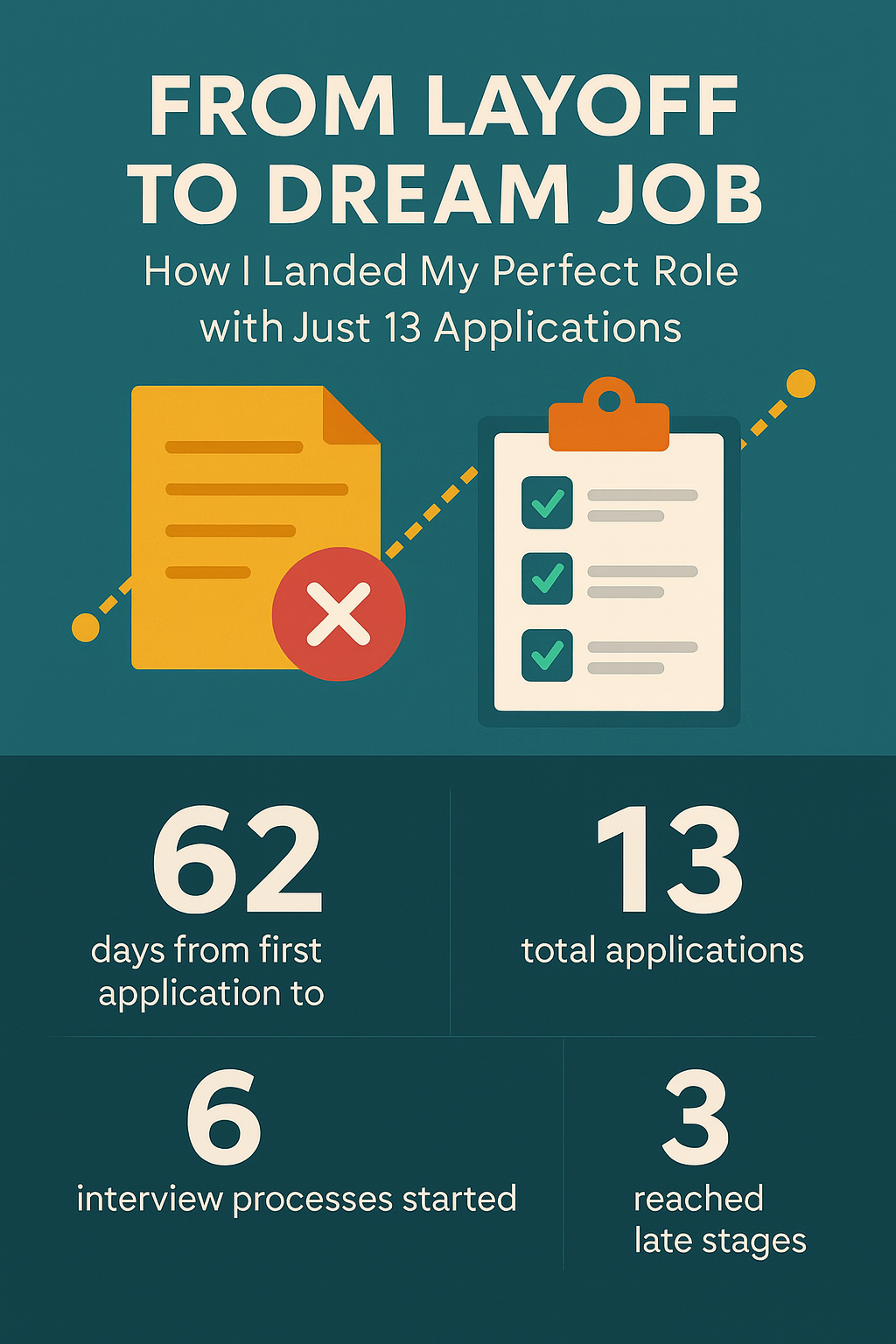
62 days from first application to signed offer
13 total applications (4 no responses, 3 early rejections)
6 interview processes started
3 reached late stages
1 stalled
1 final round (didn't get it)
1 offer—and I accepted it!
Strategy #1: Be Brutally Selective
I didn't spray and pray. I knew what I wanted, and what I didn’t want. I only applied to roles I was genuinely excited about, and where I believed I was in the top 20% of candidates or could stand out in a unique way. Because competing against hundreds of equally or more qualified candidates was a waste of everyone's time.
My filtering criteria:
Industry expertise where I had proven experience
Company stage or type I understood deeply
Functional areas where I had strong connections
Roles where my specific background created clear differentiation
This focus freed me up to prepare deeply for each opportunity and stay confident throughout the process.
Strategy #2: Make Your Network Work for You
Here's something that might surprise you: none of the jobs I applied to came from LinkedIn's job board. Every single opportunity came through my network—friends who sent roles directly, or posts that appeared in my feed because connections engaged with them. These roles are likely closer to your criteria because they are part of your strategic network curation.
To make LinkedIn work for you:
Follow strategically. Follow companies you want to work for and people in your target industry. Your feed becomes a pipeline of relevant opportunities.
Engage meaningfully. Like, comment, and reshare thoughtfully. Even small interactions keep you visible to your network.
Look beyond LinkedIn. Slack communities and industry forums can be gold mines for networking and learning about unadvertised roles.
Strategy #3: Optimize Your LinkedIn Profile
Your LinkedIn profile is your always-on resume that's working for you 24/7. Recruiters and hiring managers often browse profiles before deciding to reach out—make yours a compelling snapshot of your value.
Your LinkedIn profile is your always-on resume. Make it count:
Headline: Make it clear and specific, try "SaaS Customer Success Manager | Driving Customer Growth & Retention in Mid-Market Companies."
Photo: Professional but friendly. You want to look approachable and competent.
Open to Work: Turn it on and specify your target job titles so recruiters can find you.
Experience: Focus on projects and measurable outcomes, not just duties.
Strategy #4: Smart Resume Customization
Generic resumes get generic results. Tailoring shows you've done your homework and understand what matters most for each specific role.
Tailoring your resume doesn't need to be painful:
Keep a master list of bullet points for each role
For every application, copy and paste the 4-5 most relevant bullets
For generic roles like "Customer Success Manager," highlight industry-specific experience, tools, or customer types to stand out
Strategy #5: Message Hiring Managers (Without Being Awkward)
In a sea of applications, a thoughtful message can help your resume rise to the top.
Important caveat: This strategy only works if you're truly a qualified candidate. Sending a message won't magically make you qualified, but it can help your resume get noticed if you are qualified. When you have the right background, it might be the difference between getting an interview versus being overlooked in a sea of applications.
Pet peeve alert: Stop commenting on job postings! Why broadcast your interest to everyone (and other companies you’re interviewing with) when you could send a private, direct message? And without your resume attached, they still have to go digging for you in the system. You have to make it so easy for them that they have no reason not to look at your resume and say "oh yes! We should interview this person!"
If you are qualified, here's how to message effectively:
Only message if you're confident they're the hiring manager or recruiter
Apply first, then message
Keep it short and professional
Attach your resume
Template that works:
Hi [Name], I just applied for [Role] and wanted to introduce myself. I bring [X] years of experience in [relevant area], and I'm excited about the work your team is doing. I've attached my resume and would love to connect if you think my experience might be a good fit.
Strategy #6: Prepare Like It's Your Job
Average preparation gets average results. Companies can tell when you've done your homework versus when you're winging it—and they remember the candidates who clearly understand their business.
I treated each interview like a project:
Research deeply. Know their values, culture, recent news, and challenges. Weave this into your answers to show you're not just a fit on paper—you're aligned with their mission.
Write STAR-format answers. Prepare stories that demonstrate your impact, tailored to their priorities.
Prepare thoughtful questions. Have a list with at least 2-3 prioritized questions for each person you'll meet.
Practice with AI. Use AI tools to practice tricky questions and shape responses, but always edit heavily to sound like yourself.
Keep improving. After every interview, document what you wished you had said to improve next time.
Strategy #7: Follow Up Effectively
A thoughtful follow-up reinforces your interest and keeps you top of mind. While it won't save a poor interview, it can tip the scales when hiring managers are deciding between strong candidates.
Always send a follow-up, but make it count:
Keep it short, enthusiastic, and professional
Reference something specific from the interview
Optionally share an asset or clarify a point
If you don't have the interviewer's email, ask the recruiter politely
Don’t just copy/paste a generic AI follow up email
Use AI Smart—But Don't Sound Like a Robot
AI can be a powerful ally in your job search, but it's a tool, not a replacement for authentic communication. The goal is to enhance your natural voice, not replace it with generic templates that make you sound like everyone else.
Smart ways to use AI:
Draft first versions of cover letters, LinkedIn messages, and thank-you notes (but provide better prompts with specific details of what you’d like to call out in that message)
Practice interview questions and get feedback on your responses
Refine your STAR stories to be more concise and impactful
Research companies and generate thoughtful questions to ask
Polish your writing for grammar and clarity
Don't rely on AI for:
Final drafts without heavy editing—always add your personal touch (Triple recommend!!!)
Company-specific details that require real research and understanding
Genuine enthusiasm and personality—this has to come from you
Technical questions where accuracy is critical
The golden rule: If someone read your AI-assisted content and thought "this could be anyone," you've gone too far (or not far enough). Every piece of communication should still sound distinctly like you—just a bit more polished.
Ask Questions That Show You're Thinking Like an Employee
"Do you have any questions?" isn't just politeness—it's your chance to show you're already thinking about how to succeed in the role. Generic questions make you forgettable; strategic questions demonstrate you're serious about the opportunity.
Come prepared with questions tailored to each person:
For hiring managers:
"What does a top performer do differently in this role?"
"What does success look like in the first 90 days?"
"What's the biggest challenge someone in this role would face?"
For team members:
"What do you wish you knew before joining the company?"
"How would you describe the team dynamic?"
"What's your favorite thing about working here?"
For executives:
"What's the company's biggest priority this year?"
"How do you see this role evolving?"
"What excites you most about the company's direction?"
Prepare for the Hard Questions (They Always Come)
Most candidates prep their wins but get blindsided by failure questions. These aren't gotcha moments—they're opportunities to show resilience, self-awareness, and growth mindset.
The questions that trip people up:
"Tell me about a time you didn't meet a goal and how you handled it"
"Tell me about a failure you experienced"
"What's the hardest decision you've made?"
"Tell me about a disagreement with a teammate or manager and how you handled it"
Pro tip: Use the STAR method (Situation, Task, Action, Result) and always end with what you learned. They want to see that you can bounce back and grow from setbacks.
Turn Rejections Into Future Opportunities
A "no" today doesn't mean "never." The hiring manager who passes on you might remember you six months from now when a perfect role opens up—but only if you handle the rejection professionally.
When you don't get the job:
Send a gracious thank-you message acknowledging the decision
Connect on LinkedIn if you haven't already
Engage occasionally with their content (but don't be weird about it)
Keep relationships warm—opportunities might come back around
Remember the truth about final rounds: If you make it that far, you're a serious contender. If you don't get the offer, it's rarely about your skills or qualifications. Often it's about fit, culture, specific experience, or just that "gut feeling." Don't take it personally—one day you might be the hiring manager making that same tough choice.
The Moment It All Clicks
The role I accepted is absolutely perfect—it aligns with my skills, values, and goals. It's a fresh start with a company and team I'm excited to grow with. Looking back, I'm grateful for every step of the journey that brought me here, including the rejection that stung at the time but made room for something better.
Your Job Search Action Plan
Focus on quality over quantity. Apply only where you can be a top candidate.
Use your network intentionally. Engage meaningfully and look beyond job boards.
Be thoughtful and strategic in every interaction, from your LinkedIn profile to your follow-up emails.
Keep reflecting and improving after every interview.
Remember: you only need one yes. And when you get it, everything that came before will make sense.
Your dream job is out there. You got this!