- May 30, 2025
Aligning Your Product to the K–12 Buyer Journey
- Southern SaaS
If you're building or marketing EdTech without a clear view of the K–12 buyer journey, you're not just missing the mark—you’re probably missing the sale.
K–12 purchasing decisions are complex. Unlike in the B2B world, the “user” and the “buyer” are rarely the same person. Districts move slow. Budgets are tight. And decision-makers often rely on word of mouth, peer validation, and long-term trust before ever signing a contract.
So how do you build products and strategies that align with the K–12 buying process? You start by meeting decision-makers where they are, not where you want them to be.
Understanding the K–12 Buyer Journey
The K–12 buyer journey typically flows through five stages:
Awareness – A district or school identifies a challenge (for example, low literacy scores, communication gaps, or outdated systems).
Consideration – They start researching solutions, often through conferences, webinars, peer referrals, or content.
Evaluation – Stakeholders compare vendors, request demos, and consult teachers or instructional leads for feedback.
Decision – The budget is aligned and a vendor is chosen, often after a lengthy review and approval process.
Adoption – Teachers begin using the product. Support and onboarding determine whether it sticks or fades.
Each of these phases has different players, goals, and friction points. Your product, messaging, and timing need to reflect that.
How to Align at Every Stage
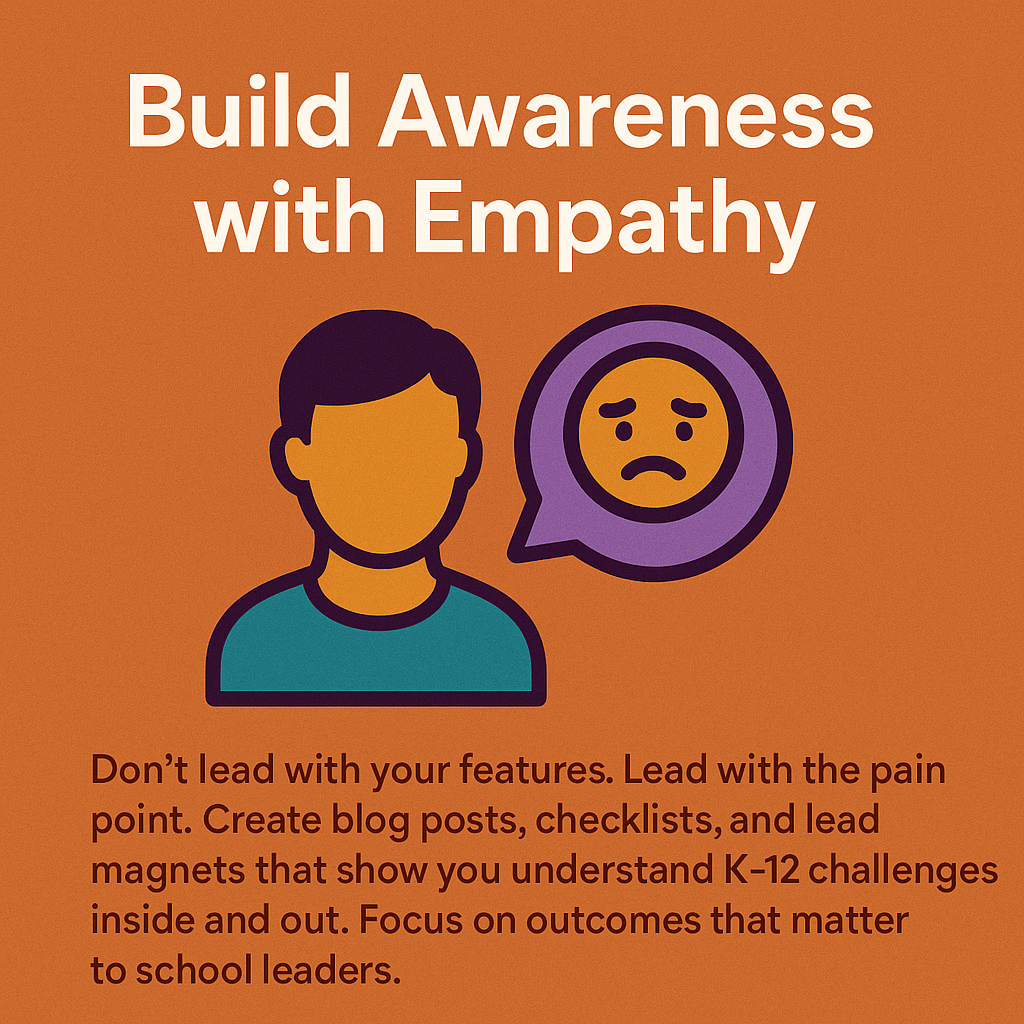
1. Build Awareness with Empathy
Don’t lead with your features. Lead with the pain point. Create blog posts, checklists, and lead magnets that show you understand K–12 challenges inside and out. Focus on outcomes that matter to school leaders.
➡️ Related Read: Teacher Feedback Loops: The Secret Sauce to EdTech Success
2. Fuel Consideration with Credibility
Offer case studies, peer testimonials, and aligned research. Show how your product works in real classrooms with real results. Make it easy for districts to see themselves in your stories.
3. Support Evaluation with Clarity
Make your demos simple and strategic. Avoid jargon. Show how the product meets curriculum standards, improves efficiency, or fits into existing systems. Offer comparison sheets and onboarding previews.
4. Guide the Decision with Confidence
Decision-makers need more than a yes from teachers. They need to know you’re compliant, reliable, and scalable. Provide documentation, references, and long-term implementation support.
5. Drive Adoption with Support
Your job isn’t done after the sale. Provide bite-sized training, teacher resources, and clear onboarding paths. Set teachers up for success and make it easy for them to become champions of your tool.
Buyer Journey = Messaging Map
Aligning to the K–12 buyer journey also means mapping your content and product experiences to each stage.
Putting It into Practice
Success in EdTech isn't just about a great product. It’s about understanding the long, human-centered process that schools use to make decisions.
When you align your strategy with the full K–12 buyer journey, you stop pushing and start pulling. You build better relationships, faster deals, and stronger long-term success.
So ask yourself: are you building with the buyer journey in mind, or hoping they figure it out on their own?